

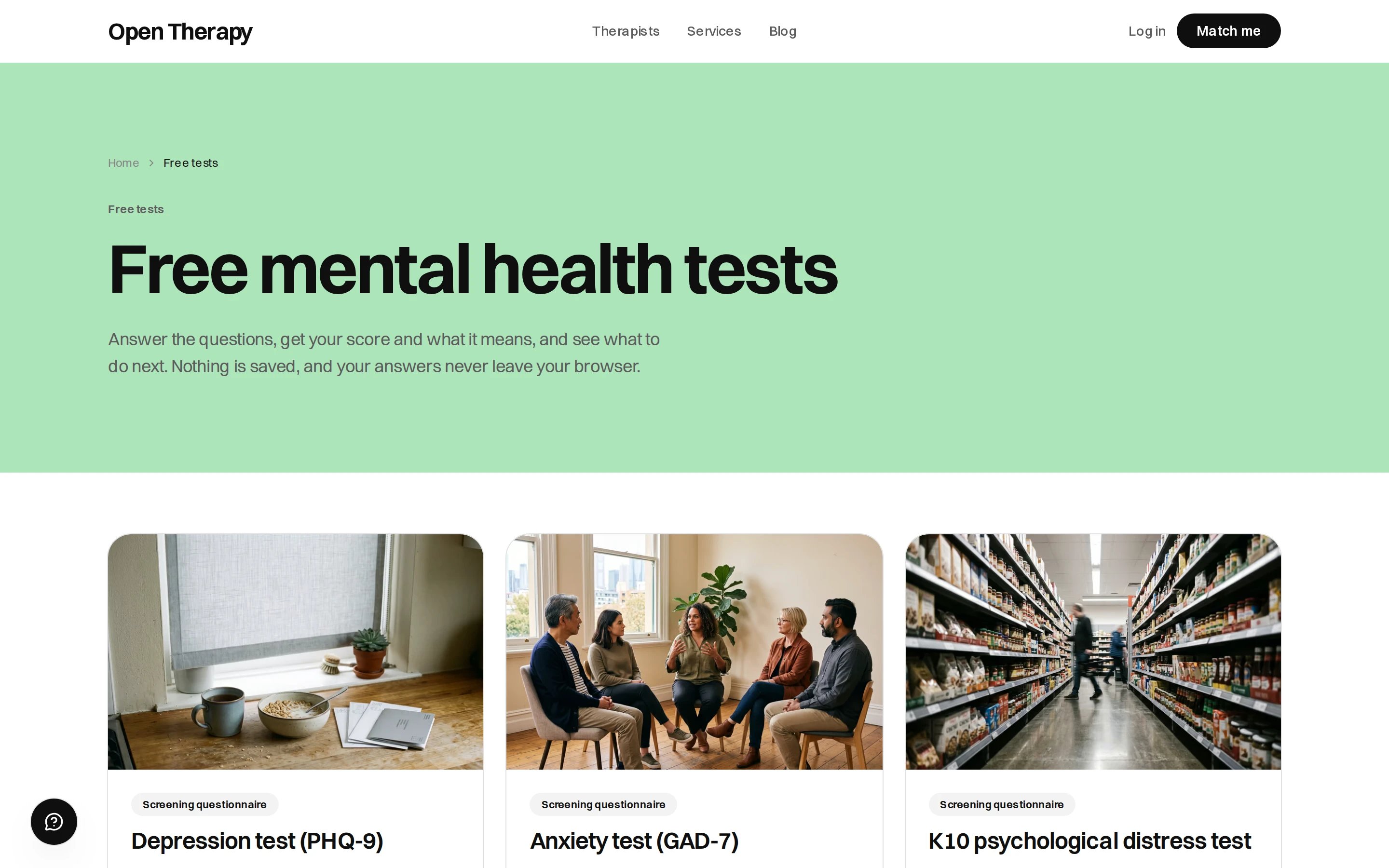
The hub lists every test on one screen, most-searched first
Two kinds of test
Screeners show a number. Reflections show the word for where you landed, not a score.
What’s on the hub
Nine published instruments, then three reflections.
The PHQ-2 is not on the hub. It is the first two items of the PHQ-9, so a page for it would offer less than the PHQ-9 under the same searches.
These are the same instruments a therapist can send you in Forms. A form your therapist sends is stored on your file. A test you take here is not.
After you finish
The result names the band, says what it means, and lists what to do next. From there you can Find a therapist — which opens matching — Browse the care type that test belongs to, or Take it again. You can also leave an email so the result, and a few therapists who work with this, are sent to you. The item answers are not in that email. If you never type an address, you stay anonymous.Related
Find a therapist
A short questionnaire, then a shortlist.
Forms and measures
Questionnaires your therapist sends, which do stay on your file.